Skip to content
  • Blog Feed
  • Random Musings of ValerieJean
    • The Darker Side
      • COVID-19 Quarantine Journal
      • Our Changing World
      • Wants, Needs, and Desires
      • Benefiting Who?
      • My Own Worst Critic: Poetry Progression
    • Genuine Self-Forgiveness
    • Ten Life Lessons from Baby Yoda and The Mandalorian: Episode by Episode
    • Speak up
    • My Daily Inspiration
    • How much does it cost to go to driving school?
    • Prevention of Swim Bladder Disease in Aquarium Fish
    • Preview of Book One: Love Down Under
    • Chapter 1: Lost in Life
  • Book Reviews
    • Year One (Chronicles of the One), by Nora Roberts
    • Northern Lights, by Nora Roberts
    • Face the Fire, by Nora Roberts
    • Driven, By K. Bromberg
    • Heaven and Earth, by Nora Roberts
    • Dance Upon The Air, by Nora Roberts
    • Begin With Me, by Claudia Burgoa (Chaotic Love Book 1)
  • Author Bios
    • About Me
  • Valerie Jean Writing Services
  • Home

Inspiring the Works of Valerie Jean

  • Mary Shelley

    March 5th, 2021
    Mary Shelley, author of Frankenstein, or The Modern Prometheus.

    Mary Shelley is known for her famous work of science fiction, Frankenstein. She was a rebel of her time period in many ways. Her feminist mother perished when she was a baby, and her father was a combination of a philosopher and politician. Although not a traditional romance writer, her passion for solving life’s mysteries makes her an honorary member of the Women’s History Month Spotlight!

    Her father eventually remarried, and although she endured her step-siblings, Mary did not care for her stepmother at all. She had grown up with a half-sister named Fanny from an affair her mother had with a soldier. Otherwise she had a somewhat bitter childhood where she was passed over for her step-siblings in terms of education and opportunities.

    Although she had no formal education, she read from her father’s library extensively. She often spent time in educated and distinguished company, including authors, poets, philosophers, and doctors to mention a few. Many of her father’s family friends supported the idea of an educated mind.

    She met her future husband through her father’s friends. He was studying under her father and already married, but the two soon ran away, taking her stepsister with them. Mary was still a teenager. This alienated her from her father and family for a long time.

    Her relationship with Percy wasn’t all butterflies and rainbows however. They started a tour of Europe and visited many writers and famous places. At some point Mary became pregnant but they lost the baby within a few days of birth.  This was just the first of many tragedies Mary survived. 

    Her half sister Fanny committed suicide while she was abroad.  Shortly after that, Percy’s wife committed suicide. In December of 1816, Percy and Mary were able to officially wed. She documented their tour of Europe in her History of 6 Weeks’ Tour.

    The idea for Frankenstein, or The Modern Prometheus, was inspired by a group of fellow writers challenging one another to a horror story writing contest. The Gothic novel was published anonymously in 1818. Many people assumed Percy Bysshe Shelley wrote the story because he wrote the prologue.

    Percy and Mary had a tumultuous marriage at best. Between the adultery and heartbreak, two more children died young, leaving one son who survived to adulthood. Percy himself drowned while out sailing with friends, leaving Mary a widow and single mother at the age of 24.

    Mary spent the remainder of her life writing and promoting her husband’s poetry and works. She published Valperga in 1823, The Last Man in 1826, and Lodore in 1835. Mathilde was published posthumously after she perished of brain cancer.

    Mary Shelley not only branched out into the male-dominated literary world. She jumped into science-fiction and symbolism, Gothic horror and humanity’s issues. Because of her skill in addressing these issues Mary, Mary Shelley was one of the most influential female authors of all time.


  • Jane Austen

    March 2nd, 2021

    Jane Austen’s style of writing and candid perspective paved the way for female romance authors for decades to come. The glimpse she gave readers into ordinary characters’ everyday lives and relationships was new and exciting. Raised in a large family, where education was valued, even in females, Ms. Austen was quite unique for her time. Her mother was known for her impromptu verse and stories, while her father was a scholarly reverend.  She had six brothers and one sister, Catherine, who was named after their mother. They were a tight-knit, supportive family. When her father retired, he began to move them all around which resulted in connections and experiences that helped later in Ms. Austen’s professional life. Very little is actually known about her personal life, as she never kept a journal or diary, but instead wrote letters to her sister, Catherine.

    Most of Jane Austen’s six major novels focus on making a social commentary about women’s dependence on marriage to gain social status among British land-owners. This recurring theme could stem from her experience being betrothed to a young man within her social circle, then breaking that betrothal the next day. Rumor was she loved someone else, but they died in some tragic way. Although she wrote novels that portrayed the complications of love and romance, she also believed in the happily ever after. She was more practical about marriage herself, however, often writing to her sister about how financial decisions dictated her relationships.

    She wrote Juvenilia, also called Volumes of the First, Volumes of the Second, and Volumes of the Third early in her writing career. A collection of poetry, short stories, and parodies on society, it wasn’t published until much later. It was within sometime after the writing of this collection, particularly Love and Freindship (sic), that Austen began to seriously consider writing as a profession. She began many works that she would take breaks from or leave unfinished. She spent the middle years of her life writing profusely, eventually publishing four major novels anonymously during her lifetime. She continued to write up until her death. Although she wrote classic love stories, sadly she never seemed to find a love of her own.

    Major Works (with publication date)

    • The Beautifull Cassandra (1793)
    • Lady Susan (1794)
    • Love and Freindship (2015)
    • The Watsons (1804)
    • Sense and Sensibility (1811)
    • Pride and Prejudice (1813)
    • Mansfield Park (1814)
    • Emma (1815)
    • Sanditon (1817)
    • Northanger Abbey (1818)
    • Persuasion (1818)
    • The Wit and Wisdom of Jane Austen (2017)
    • A Memoir of Jane Austen (2017)
    • The Letters of Jane Austen (2018)
  • Tips for Teaching at a Community College

    February 27th, 2021

    Be rigorous with your expectations but also realistic about time and priorities.

  • Creating a Kind World

    February 21st, 2021

    Kindness has become a trend in recent years, especially on social media. This past week was actually Random Acts of Kindness week in the United States. But what if, instead of completing random acts of kindness, nearly every thought we had centered on being kind to one another?

    Imagine how different our world would be! If we gave kindness purposefully, to those who need it most. Yes it’s great to just “sprinkle kindness like confetti,” but imagine if that kindness was more inherent within each of us. If it just came naturally. If it wasn’t sprinkled, but planted with purpose to make the world a kinder, more compassionate place.

    Being kind means being friendly, even to people who don’t always agree with you. Sometimes even people who may not deserve your kindness. Saying hi, smiling, and having conversations with people is an act of kindness in itself. Friendliness may not come naturally, especially on days where you aren’t feeling on top of the world yourself. Looking beyond yourself and realizing that you have an impact on everyone you come into contact with and beyond can help you find that friendliness when you need it, even if you have to fake it a little.

    Generosity is another aspect of kindness. Many people think this means donating money on a regular basis. You can be generous with your time, resources, talents, and patience, among other things. It can be a challenge, especially in trying times such as this, to feel generous. Either the need of others feels overwhelming to the point of paralysis, or you feel as if you barely have enough to get by so you don’t have enough to help other people. Taking the idea of monetary value away from generosity makes it more attainable. Everyone has strengths, which means everyone has something to give.

    Deciding what to give means learning how to be considerate of other’s thoughts, feelings, backgrounds, and beliefs. Having consideration and compassion for others doesn’t mean giving up your rights to getting what you want (within reason). It just means taking into account their feelings while you go about doing that. It means having compassion for what someone has gone through to gain their differing perspectives on life. Letting that compassion guide your actions can help you take a kinder path.

    Although being kind is much more complicated than just being friendly, generous, and considerate, those are three traits to focus on in order to begin living a more caring life.

    So who should we be kind to in life? Does everyone deserve kindness? Even the mean and cruel people of the world? There are some people who will not deserve your kindness. It is up to you to set limits and boundaries based on your background and experiences. Trust your gut and use reason when dealing with people.

    The people we should really be kind to in our lives are the loved ones we deal with on a daily basis. This can be a challenge because the ones we know best are the ones whose flaws we see most often. They are the ones we most easily get annoyed with. Remembering to be patient as well as friendly, generous, and considerate will help you spread kindness to those who matter most in your life.

    Ways to habitually work kindness into your day, week, month, or even your year

    • Smile at people
    • Make eye contact
    • Say please and thank you
    • Open and hold doors for people
    • Answer phone calls
    • Hug people you know
    • Send cards and letters
    • Give genuine compliments
    • Take help when it is offered
    • Actively listen to others
    • Do a chore without being asked
    • Set aside your cell phone
    • Include people
    • Check in with your friends
    • Let someone in while driving or waiting in line
    • Offer your seat to someone
    • Leave a bowl of candy with an inspirational saying on it in the employee lounge
    • Drop off baked goods for neighbors or friends
    • Volunteer for a cause you feel connected to
    • If you have more ideas, please comment!

    If it’s so easy, why aren’t we kind all the time? Why do we disrespect each other and judge one another? Many times cruelty, the opposite of kindness, comes from insecurities or trauma. Sometimes it is passed on from generation to generation as a defense mechanism. If one is raised in an environment of judgement and condemnation, it’s the type of environment one has been trained to create. So how can you deal with it when someone is cruel? How can you turn that situation or environment into a kind one? By returning their cruelty with kindness as much as possible. Those people who need kindness the most, other than the ones you care about, are those who act like they want it the least. I recommend the cliche “Killing them with kindness” because it allows you to be the hope in the situation, rather than the dire circumstance.

  • 50 Things to Know About Teaching at a Community College

    February 18th, 2021

    I’m extremely excited to announce I have earned a contract for 50 Things to Know About Teaching at a Community College for the 50 Things to Know About…book series, published by CZYK Publishing.

    Photo by Pixabay on Pexels.com
  • Playing Your Heart Out

    February 15th, 2021

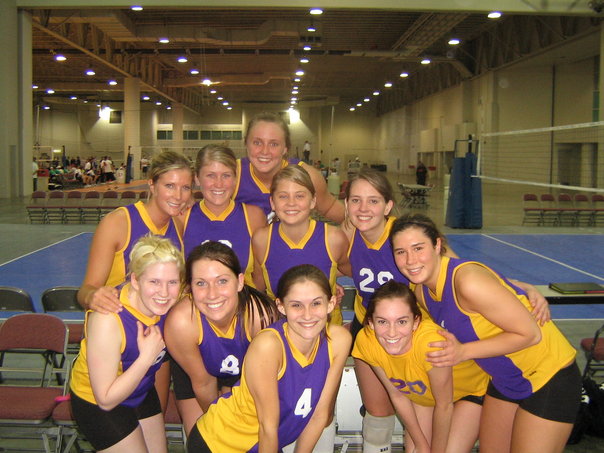
    Alongside my love of writing, comes a somewhat surprising love of sports and fitness. A book worm and band nerd, I also played three sports all of high school, and both club and collegiate volleyball in college. I have watched team sports evolve over the last decade, and although expectations, time commitments, and even rules have changed, there are some constants that make playing sports with a team a life experience worth having.

    My Nationals team from Western Illinois University – circa 2006.

    Effort Equals Everything

    There’s no better feeling than leaving it all on the court or field. Whether I win or lose, as long as I’ve given my best effort, the feeling of satisfaction runs strong. Leaving the volleyball court feeling bruised and sweaty makes all the drills and practice worth it. Walking away from the soccer field breathing heavily and dragging stinky sports equipment makes all the conditioning and repetition seem distant and forgotten.

    The value of being a try-hard and putting visible effort in during athletics hasn’t changed. People will always have different levels of skill and talent, but hard work is what sets some people apart. It’s what separates the stellar athletes from the average players.

    It can be tough to put 100% effort all the time, though. So how do you stay focused and driven? How do you bring the best version of yourself to each practice, game, match, or competition?

    Bringing the Best You in sports (and life)
    • Get the recommended amount of sleep for your age
    • Eat healthy, nutrient-rich foods
    • Drink water and electrolyte-rich drinks
    • Listen to empowering music or speeches
    • Read inspirational stories or quotes
    • Watch motivating videos or speeches
    • Study your opponents, skills, or strategies
    • Have a routine for going to practice and games
    • Communicate with your teammates outside of practice and games
    • Be aware of your moods and stressors in order to communicate to teammates

    Teamwork Makes the dream work

    Some of the best people in my life played a team sport with me. Accomplishing a physical goal with a group of like-minded people helps complete that feeling of satisfaction. Each person on an ideal team should play a role. It may not be their perceived ideal role, or where they wanted to be, but they should have a place or purpose. Although in volleyball, there have been positions added and rules changed, like the libero, the idea of depending on your teammates has not.

    Working with a team means working with individuals of varying capabilities, temperaments, backgrounds, and motivations. If everyone on the team is on the same page, teams can take on any challenge. If someone isn’t put in the right role, or believes they should be something else on the team, teams can create their own biggest challenge. I’ve played on a variety of both, learning empathy, patience, strategy, communication skill, and more. The sport itself is my passion, but my teammates are what keep me playing during the down times and tough points.

    FAILURE FUELS FOCUS

    Those tough points and down times were often what taught me the most about the sport, people, and life in general. Something else that remains an inherent part of sports is the fact that failure can be the best teacher when framed correctly. As a player, thinking back on the points I lost, being able to reflect on why and how I lost those points helped focus me in on what I need to work on.

    As a coach and parent of an athlete, how I address these failures is somewhat different than it would have been when I was an athlete. You have to be very careful what you say and how you say it. There are many new factors in making someone feel like a failure, including social media. Making sure athletes understand that failure is how points are scored helps them realize it’s not the end of the world. Pushing them to reflect on what led up to that failure is the best way to help them feel as if they can overcome it next time the situation arises.

    Humility Helps

    Nothing can kill a team’s vibe quicker than an arrogant attitude or individual. I’ve always had self-esteem issues, body image issues, and the normal social, peer pressure issues that most girls have. This means I very rarely feel confident enough to be arrogant. The volleyball court is the one place I used to allow it to happen, because I did feel confident and in charge.

    I quickly learned that those moments ended up creating a rift between myself and my teammates. It didn’t matter if I’d just served the game-winning point, or killed the match-winning set; if I didn’t celebrate with my teammates and give them the gratitude they deserved, the distance between us grew. The key to success in team sports is being humble enough to lift up your teammates instead of yourself.

    Grit gains greatness

    One final thing that hasn’t changed about team sports is the fact that having grit matters. Focusing on the long-term goals, whether they are for that season or for a lifetime, helps one have perseverance and passion in those moments when we don’t want to work hard. Grit is what makes the difference between consistency and chaos, courageous and cowardly.

    Grit is a trait some people have more of naturally, but life experience, observation, reflection, and training can fine-tune this quality. Setting goals, reading or hearing other people’s inspirational stories, role-playing in individual or team situations, and conditioning within game-like drills are some ideas of what help develop grit.

    Effort, teamwork, failure, humility, and grit are constants in a world where everything can change in an instant. Teaching athletes to focus and deal with these traits is paramount to helping them win, not only in sports, but in life. Team sports may be constantly evolving, but there are some things that should never change.

  • 13 Covid-friendly Valentine’s Day Ideas

    February 12th, 2021

    Whether you and your significant other have been together one night or fifty years, Valentine’s Day this year will be a little different. Although some states have lifted restrictions, many still have new rules in place due to the deadly Coronavirus pandemic. So how can you make Valentine’s Day a romantic experience despite the challenge of a life-threatening disease?

    Socially Distant Activities

    • Send Valentine’s cards through snail mail. Old-fashioned, but personal and definitely socially distant. The challenge of this is asking for addresses if you don’t have them. And make sure you have plenty of stamps!
    • Create a mix-tape for your significant other. Dancing to it doesn’t equal socially distant, but the act of listening to it can be. You can do this old-school with a cassette or CD, or you can use Spotify or YouTube to send a playlist.
    • Take a hike or go skydiving together. Both these activities allow you to have plenty of space between people. They are also energizing and fun, which helps inspire romance!

    Quarantine Activities

    • Make breakfast in bed. If you’re already exposed to your sweetie, might as well get close and snuggle while you both eat. Make it practical but romantic. Be sure to have lots of napkins and a solid steady tray for food and drinks!
    • Decorate your house for the day! Hearts, hearts, hearts! A few flowers here, some lovely gauze there, and what a lovely atmosphere you’ve created. Dim the lights or make things sparkly. You know your significant other best, so make them feel special!
    • Make a photo book. Reminiscing about the connections you have with the important people in your life can help bring you closer to them. It also makes a great gift when completed! You can do this manually using good ole paper and scrapbooking supplies, or you can use a website like Shutterfly.com to create virtual masterpieces.
    • Watch a movie marathon. If your partner is up for it, romances and romantic comedies would be appropriate for the day. If not, I’d recommend the Marvel movies, The Hobbit and Lord of the Rings series, or Underworld for some unique twists on romance and love.

    Virtual Activities

    • Play a game. Bingo, trivia, Pictionary, Charades, Name-that-tune, Catchphrase, or whatever other game you love. You may need copies of the boards and pieces, or an online version, but this one can be as simple or complex as you want to make it.
    • Teach/Learn how to cook a special dish. You can definitely also do this one in person, but it seemed like a fun way to connect through video also. You can act like it’s a cooking show and you’re the star!
    • Visit the Zoo. Many zoos have online virtual tours. This would be a cute virtual date with your kids! See the list below for links to several:
      • San Diego Zoo
      • Vancouver Zoo
      • Smithsonian Zoo
      • Animal Cams
      • Edinburgh Zoo
      • Dublin Zoo
      • Zoos Victoria
      • Monterey Bay Aquarium

    Gift Ideas

    • Get your significant other a matching outfit. If it’s holiday-based, even better! But it could be matching flannel pajamas, robes, team spirit wear, swimsuits, underwear, or any other passion you two share! Check out Shinesty.com’s couples matching underwear section for cute ideas!
    • Food, crafts, and services from local businesses. Now is the time to show them your love also. If you don’t want to lose them, support them by buying gifts locally whenever possible. Gift cards are also a practical, thoughtful option during this unstable time.
    • Who doesn’t need more hand sanitizer during this? Whether you get a cute purse-sized bottle, or the wall-mounted dispenser like the hospitals have, you’ll use it at some point.

    In today’s uncertain world, you never know how many Valentine’s Days you have left. So no matter what your take on the life-altering pandemic, find a way to celebrate Valentine’s Day this year with the ones you love.

  • Our Romance with Work

    February 7th, 2021

    How many hours of your life do you think you spend at work? Most people with a full-time job work 40-60 hours a week. Some people work 36-48 hours straight then take two days off. Others work a part-time job of less than 20 hours a week. Some work for other people and some work for themselves. There are day shifts and night shifts. Many people even have to work two jobs in order to support their family or lifestyle.

    Most people equate deciding what to do in life with choosing a career. But what you do with your life doesn’t have to revolve around your job, does it?

    The purpose of your life is not defined by where you work or who you work for. It’s defined by how you work and how you treat people.

    So why does Western Civilization romanticize working? Obviously our consumer-driven society has much to do with that. If you work more hours, you get more money (generally). This means you can buy more things which raises your status in the eyes of your peers.

    But does it really? Having material possessions and worldly objects in order to impress others or feel valuable is really just replacing emotional and spiritual value that you can find within yourself. The clutter and junk and purchases you make won’t fill the void inside you if you’re not happy with yourself or how you’ve been acting.

    Most people start to realize this at as they grow up. So why do they continue to work themselves to early graves? Why do they put their career ahead of their personality, or family, or morals? What on earth draws us in about working so much?

    And how can we limit the focus we put on our work?

    • Budget – both time and money.
    • Keep it in perspective.
    • When you’re off the clock, write it down for later.
    • Set daily, weekly, monthly, and annual work goals and adjust them as needed.
    • Calculate the amount of time you put in divided by your earnings.

    If I had known some of these tips early in life, I would have saved myself time and heartache in both my professional and personal relationships.

    My romance with work began early in life. I would play teacher and students with my friends. Guess who was always the teacher?

    And as I grew older and worked my way through high school and college, I figured out that work didn’t mean career. I had some pretty awful jobs at times. I worked in restaurants, early morning hours at front desks, and in the college cafeteria. But my career drove me to keep going. To better myself.

    Teaching itself breeds the idea that there can always be better. Better ways to introduce material. Better ways to discipline and manage student disruptions. Better ways to integrate technology. Better ways to motivate students. Better ways to communicate with parents and communities. Better grades. Better performances. Better evaluations. I could go on and on. Every professional development conference or meeting is a chance to better yourself as a teacher.

    This drive to better myself needs to come from within.

    Each day should be a romance with yourself, a competition with yesterday’s self.

    And the focus of this competition or romance shouldn’t be the end result. Acknowledging the effort and process it took to achieve something is vitally important. This is where the inherent worth comes in, even if you fail at getting to the intended outcome.

    So how do you find a balance between being content with who you are and wanting to better yourself?

    • Live in the moment, then let it go.
    • Count your blessings by keeping a gratitude journal, or writing thank you notes.
    • Be honest with yourself and others.
    • Set daily, weekly, monthly, and annual personal goals.
    • Create an “I am…”/“I want to be…” list.

    Adding this balance to your life can help your productivity and happiness both at home and in the workplace. So begin to romanticize balance and moderation, not just with your career but in all aspects of life.

  • Get the latest content delivered straight to your email!

    February 6th, 2021

    By clicking submit, you agree to share your email address with the site owner and Mailchimp to receive marketing, updates, and other emails from the site owner. Use the unsubscribe link in those emails to opt out at any time.

    Processing…
    Success! You're on the list.
    Whoops! There was an error and we couldn't process your subscription. Please reload the page and try again.

  • What do you do?

    February 4th, 2021

    What do you do when everything in life is a should-do, and there are no more want-to-do’s?

    What do you do when everywhere you go in life feels like you’re under a microscope about to be analyzed and torn apart at any moment?

    What do you do when everyone says you can do it, but you’re not sure you can anymore?

    What do you do when every time you try something, new or old, it seems like it’ll work until you screw it up?

    What do you do when every dark emotion hides inside until it suddenly pours out of you like an uncontrollable, slippery, oil spill?

    What do you do when every ounce of your positivity can’t shine through the dark?

    What do you do when all of the light you thought was in you fades and turns to grey?

    What do you do when you feel like all you do is hurt yourself and others?

    What do you do…….?

    You breathe. Just breathe.

    You smile. Just smile, even if it makes you cry.

    Breathe some more. Take a step.

    Whatever direction you need to go. Front, back, side up, down.

    It can be on your knees if it has to be.

    Just keep moving. Keep breathing.

    That’s what you do.

←Previous Page
1 2 3 4 5 … 7
Next Page→

Website Built with WordPress.com.

Loading Comments...
  • Subscribe Subscribed
    Inspiring the Works of Valerie Jean
    Join 65 other subscribers

    Have a WordPress.com account? Log in now.

  • Inspiring the Works of Valerie Jean
    View site in Reader
    Manage subscriptionsSign upLog in
    Report this content
    Collapse this bar